About me

Feeds RSS
Feeds RSS

miércoles, 22 de febrero de 2012

FUENGIROLA WEATHER

Hello! We are studing ANDALUCÍA, for that we will see the weather of our town.


FUENGIROLA WEATHER
Costa del Sol Weather and Climate Chart


Costa del sol Weather and Climate information for Torreblanca, Fuengirola
Fuengirola enjoys over 300 sunny days a year and an average temperature of 19º C, this is due to our micro-climate. Flanked by the warm Mediterranean and the Sierra Blanca mountain range (which protects us from the worst weather and extreme elements) the winters here in southern Spain is mild and bright, the summers are warm and dry. The guaranteed sunshine is one of the main reasons why the Costa del Sol is so popular with holiday makers and golfers.
The Costa del Sol is also referred to as the 'Costa del Golf'. The climate on the Costa del Sol means that those who book a golfing holiday rental are almost guaranteed a dry, sunny round of golf any time of the year. The area boasts a variety of courses each offering different challenges making the courses suited to both the novice golfer and the expert.
Because of the Costa del Sol's sunny climate, it's an ideal holiday destination for sport lovers. Fuengirola is an ideal location to be based as it is central to many tourist attractions and well known towns. The Costa del Sol has an abundance of sporting facilities which includes windsurfing, sailing, snorkeling, diving, paragliding, golf and much more.
Virtually all of the beaches along the Costa del Sol are European Blue Flag rated. Blue flag beaches are recognized as having high environmental, sanitary and safety standards - there are 13 of them along the Costa del Sol, one of which is Los Boliches beach (a 15 minute walk from the villa).
The Costa del Sol weather is almost guaranteed for those looking for golf and beaches. The Costa del Sol is famous for nightlife too and there are an enormous amount of restaurants, clubs and bars to suit all ages and nationalities.


http://www.villalavera.com/pages/costadelsol-weather.html

miércoles, 8 de febrero de 2012

Poemas de García Lorca

Aquí teneis algunos poemas de García Lorca cantados por distintas personas.
Pincha aquí: http://youtu.be/B0HbuxoeWLU

Otros poemas:http://youtu.be/kcexu5LSM_E


http://youtu.be/I5EBFJcthMc

martes, 7 de febrero de 2012

ANDALUCÍA


28 de febrero: Día de Andalucía

El día 28 de febrero, Día de Andalucía, se celebra todos los años el nacimiento de Andalucía como Comunidad Autónoma por decisión libre y soberana del pueblo andaluz, consultado en referéndum, y en el contexto de una España de libertades democráticas. La conmemoración cada año de este día festivo, en torno al 28 de febrero, es una oportunidad que se aprovecha en los centros escolares para fomentar el conocimiento y la reflexión, en un marco de convivencia, sobre Andalucía y la cultura andaluza.


Vamos a conocer nuestra Comunidad, para ello pincha aquí http://www.terra.es/personal2/pfigares/geogr.htm#espacio


Uno de los poetas andaluces más importante es Federico García Lorca. Si quieres ver sus poesíashttp://www.actiludis.com/wp-content/uploads/2012/02/DÍA-DE-ANDALUCÍA.pdf


Andalucía tiene 8 provincias: Málaga, Almería, Granada, Jaén, Córdoba, Sevilla, Huelva y Cádiz. Pincha aquí y trabajarás con los mapas


martes, 24 de enero de 2012

75º ANIVERSARIO DE LA MUERTE DE GARCÍA LORCA


Federico García Lorca (Fuente Vaqueros, Granada, 5 de junio de 1898 – entre Víznar y Alfacar, ibídem, 18 de agosto de 1936). Fue un poeta, dramaturgo y prosista español, también conocido por su destreza en muchas otras artes. Adscrito a la llamada Generación del 27, es el poeta de mayor influencia y popularidad de la literatura española del siglo XX. Como dramaturgo, se le considera una de las cimas del teatro español del siglo XX, junto con Valle-Inclán y Buero Vallejo. Murió ejecutado tras la sublevación militar de la Guerra Civil Española, por su afinidad con el Frente Popular y por ser abiertamente homosexual.


Para saber más de su vida y obra pincha en este enlace http://es.wikipedia.org/wiki/Federico_Garc%C3%ADa_Lorca


La producción literaria de garcía Lorca fue muy extensa, si quieres conocer algunos de sus poemas http://www.poesia-inter.net/indexfgl.htm


miércoles, 7 de diciembre de 2011

LIVING THINGS

Unit 1: Classifying living things There are many different types of living things. We classify tem according to characteristics that make them similar or different. We can classify living thins into FIVE GROUPS 


1)·ANIMALS Animals can move but they cannot make their on food. -Some animals, like mice, chickens or snakes, have a spine. They are vertebrates animals.
-Other animals, like flies, worms or starfish, haven’t got a spine. They are invertebrate animals. Invertebrates 2)PLANTS. Plants cannot move but they can make their own food. 


3)FUNGI( HONGO). Fungi cannot move and they cannot make their own food. Some fungi, like mushrooms and moulds.


4)MONERAS: are unicellular, for example, bacteria. They are very small living things that we cannot see without a microscope. Some microorganisms beneficial but others produce illnesses.


5) PROTOCTISTA: are unicellular, por example, algae or protozoa.

 TODOS LOS SERES VIVOS ESTÁN COMPUESTOS POR CÉLULAS, CON 3 PARTES PRINCIPALES:
1) MEMBRANA
2) CITOPLASMA
3) MATERIAL GENÉTICO


lunes, 21 de noviembre de 2011

Nutrientes

RESUMEN del tema


UNIT 4º FOOD AND NUTRIENTS


A balanced diet means Ealing a variety of foods. The foods have different origins: animal, vegetable or minerals.
Each type of food is made up of different substances called nutrients.
There are different nutrients in food:
1) Proteins: you find then in meat, fish, eggs, milk and milk products. They build you muscles.
2) Fats: you find fats in oil, margarine and butter. They give you energy.
3) Carbohydrates: you find in bread, pasta and rice. They also give your body energy.
4) Vitamins and minerals: you find lots of them in fruits and vegetables. They are important to your nervous system.

viernes, 11 de noviembre de 2011

LA ALIMENTACIÓN


TEMA 4º SALUD Y ALIMENTACIÓN


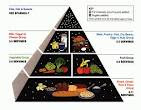
Vamos a trabajar hábitos alimenticios sanos. Para ello, primero aprenderemos los grupos de alimentos que hay y después trabajaremos con pirámides de alimentos. Espero que te gusten estos enlaces